Limited Signed by Author
IntroductionMarescalchi's social standing and military career placed him in a privileged position from which to observe the world of arms and fencing traditions of his time. His work reflects multiple influences: the Roman-Marcellian tradition, of which he was a clear exponent and a direct pupil of the family; the Neapolitan school, revitalised in those very years by Giovanbattista Marcelli and his successors; the Spanish system, encountered through his military service in Central and Southern Italy; the French style, which was only beginning to exert its cultural influence over the European art of arms; and finally, the Bolognese tradition, deeply rooted in his own family background.
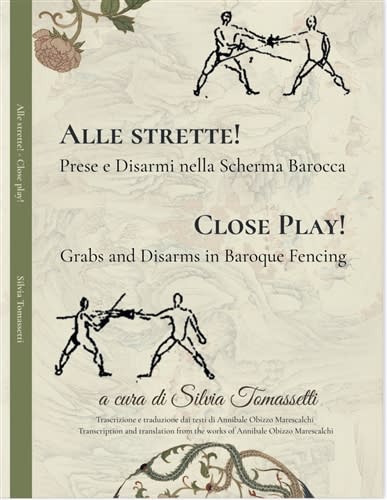
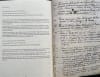
The manuscript of Marescalchi-still unknown to the general public-preserves, perhaps more than any other surviving text, a remarkably rich trove of techniques, principles, and reflections deserving of rediscovery. In this work, I have sought to offer a faithful and comprehensible translation of the section devoted to close combat, accompanied by an introduction to its principles and several historical and philological commentaries. This is intended to bridge the distance between ancient knowledge and modern sport. Furthermore, I have chosen to provide an English translation-realised with the assistance of my friend, fencing enthusiast, scholar, and translator, Adam Fretwell-so that the dissemination of the manuscript may not be hindered by linguistic barriers.
This manual aims to explore in depth the techniques of close-quarters combat with the sword within the context of seventeenth-century fencing. It is designed to guide the reader through the stages of learning-from fundamental principles to the most complex applications-through a combined practical and theoretical approach that enables a profound understanding of movement, strategy, and the philosophy underlying every strike and parry.
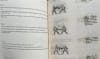
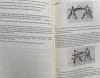
The work is intended as both a conceptual and practical guide to understanding and applying these techniques, providing a coherent framework through which study may acquire depth and meaning. Each illustration is accompanied by a faithful transcription of the original manuscript, together with Italian and English translations, to facilitate broader accessibility and scholarly exchange.
Whether you are a beginner approaching this captivating discipline for the first time, or an experienced practitioner seeking deeper insight, you will find in these pages a valuable compendium to guide you step by step through the art of gioco stretto-close play with the sword. It is my hope that you will not only learn the techniques presented here, but also come to appreciate the intellectual and cultural legacy that this noble practice has left to us.
Notes on the AuthorObizzo Annibale Marescalchi was an Italian nobleman of the seventeenth century, renowned among his contemporaries for his skill in both fencing and horsemanship. The second son of Fulvio Antonio Marescalchi-and thus destined for a military career-he served as Colonel of the militias of the Papal States. He received a distinguished education at the Seminario Romano and undertook his fencing training at the Academy of the Marcelli family, which he himself described as one of the most influential fencing traditions of his age.
A celebrated Cavaliere, Marescalchi counted among his pupils several prominent figures of the period, including Carlo Cesare Malvasia. As a gifted translator, he published in 1670 the Italian edition of Pensieri militari (Military Thoughts), the work of his friend and colleague, the Spanish soldier and author Pietro Opezinga. The translation was issued in Rome by the publisher Bernabo. Marescalchi also devoted himself to numerous manuscript translations from French-several of which are scheduled for future publication.
The Marescalchi family was a distinguished Bolognese noble house, active primarily between the seventeenth and nineteenth centuries. Originally from Bologna, with established ties in the Modenese area, the family played a significant role in the city's cultural, political, and intellectual life. Several members distinguished themselves as jurists, soldiers, scholars, and officials within the Papal administration. The Palazzo Marescalchi in Bologna stands as a lasting testament to the family's historical and cultural prominence. Among its most notable descendants was Ferdinando Marescalchi (1754-1816), who served as Foreign Minister of both the Cisalpine Republic and the Kingdom of Italy under Napoleon, later ennobled as Count of the Empire and Senator of the Kingdom of Italy.
The manuscript by Obizzo Annibale Marescalchi presented in this edition remains virtually unknown to the public. It preserves a substantial body of techniques, principles, and reflections that are worthy of rediscovery. His writings are distinguished by their clarity of exposition, enhanced by detailed figures illustrating each technique, and reveal an ambition to elevate fencing to a rational discipline-one grounded in geometric, physical, and moral principles.