




Edited by Michael Chidester
Illustrated by Hans Christoph Stimmer, Michael Bocksberger, Franz Oberreit, C. Wunderdinger, & G. W.
In his short life, master cutler and Freifechter Joachim Meyer had quite a successful career as a fencing master, teaching craftsmen and noblemen alike while also authoring at least four different fencing treatises (and possibly more). His works became renowned far outside of his own nation and were copied by other authors for over a hundred years after his death.
Meyer’s treatises teach complex and sophisticated methods for using all the typical weapons of his day, beginning with the two-handed sword prized by the medieval tradition of Johannes Liechtenauer, then showing how traditional German fencing should be applied to the eastern European dusack and Mediterranean rapier which had become popular as sidearms, and finally covering the dagger and polearms that were commonly used in the militias of the Imperial Free Cities.
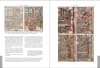
This book will aid in the study of Meyer’s works, and especially his longest and most developed treatise, Foundational Description of the Free, Knightly, and Noble Art of Fencing, published in 1570. In it, the 62 elaborate Figures created by the workshop of Hans Christoph Stimmer are printed in two different formats—a set that were lavishly painted in 1574, and an unpainted set with the backgrounds removed for clarity—along with compilations of all references to each Figure in the text. The illustrations from the München, Lund, and Rostock manuscripts are also included in appendices for reference, and an introduction by Michael Chidester describes Meyer’s book itself and the process of creating books in the 16th century.
Available in a prestige hardcover edition with coated paper for optimal color fidelity, a spiral-bound softcover on matte paper with premium color ink, and a budget perfect-bound softcover with standard color ink. The hardcover uses high-end coated paper for optimal color fidelity; the softcover editions both use an uncoated paper which doesn’t take color quite as well, but is better for writing in.