Home >
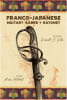
Franco-Japanese Military Sabre and Bayonet

Franco-Japanese Military Sabre and Bayonet

4 Reviews
$
Stock Status: (Out of Stock)
Product Code: Book-RM.Fra01
Franco-Japanese Military Sabre and Bayonet
by Russ Mitchell
Paperback

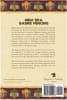
Beginning in the Meiji Restoration, Japan entered a period of intense and dynamic martial arts development, allowing, for the first time in centuries for Japanese citizens other than the Samurai class to receive combat training. This training did not happen in isolation, but involved multiple military embassies from France, which helped to train the Imperial Japanese Army from a fledgling organization scarcely capable of defending its own borders, into a force to be reckoned with on the global stage.
The Japanese did not passively receive French instruction, but adapted it to their own combat theories, creating methods which became less and less "westernized" during the period from the Meiji Restoration until World War I. This book contains translations from three manuals, as well as notes and appendices to help the reader appreciate these dynamic and sophisticated fencing methods and the context in which they emerged.

Reviews

Average Rating:
( 4 )
Anonymous Person from las vegas, NV United States
November 11, 2024
Great book!
Great book! Lots of history.
Was this review helpful to you?
JamesF from Bremerton, WA
April 20, 2024
Text = good; book binding = terrible
So, just to get the elephant out of the room, the pages of the book are cut poorly, with the back pages being larger than the ones in front (with the front pages smaller than the cover). Also, the binding is poor and one page slipped free during my initial perusal through the book.The content of the book seems fine. It uses full English text, with frequent footnotes indicating Japanese terminology (both in roman letters and kanji). For the terminology in the footnotes, some of the kanji readings are a bit curious, and don't match the usual expected, but I'm happy the kanji is listed in the first place. As to the narrative translation, it defers to English terminology (with occasional widely-known fencing jargon of foreign origin like "riposte").As this is a translation of a set of historical manuals (basically three editions of the same manual), I will not judge the instructional quality. I do appreciate the appendices added by the authors.
Was this review helpful to you?
Anonymous Person from Vancouver
December 4, 2023
Was this review helpful to you?
Shenghui Li from Piscataway, NJ United States
March 30, 2023
Was this review helpful to you?
Empty Cart